
For centuries, archaeologists and museum curators have described torcs (also spelled torques) as little more than decorative status symbols—twisted neck rings worn by ancient warriors and elites across Iron Age Europe. But what if we’ve misunderstood their purpose entirely?
What if these heavy metal collars weren’t just about showing off power—but generating it?
Let’s reevaluate the history of torcs not as ornamentation, but as technology—ancient, elegant, and electrical.
What Is a Torc?
A torc is a rigid, circular neck ring, usually open at the front and crafted from metals like copper, bronze, gold, or silver. They date back to the Bronze and Iron Ages, worn by the Celts, Scythians, Thracians, and others.
They’ve been found buried with chieftains, warriors, and sacred artifacts. Some simple, some exquisitely ornate. But almost all have one thing in common: They encircle the throat, close to major blood flow, nerve centers, and the skin’s natural moisture. This location isn’t an accident.
Torcs as Bioelectric Devices
Modern science now confirms that when two dissimilar metals like copper and silver come into contact with sweat, they create a galvanic reaction. In plain terms: you’ve got a battery around your neck.
Copper acts as the anode, silver as the cathode, and sweat as the electrolyte. Together, they generate a small but real electric current. This isn’t pseudoscience. This is basic electrochemistry, exactly how modern wearable health devices, smart fabrics, and even wound-healing patches work today. Our ancestors didn’t need a lab to tell them copper and silver felt different when worn together. They simply observed the results: Faster healing. Reduced infections. Protection during battle. Enhanced spiritual energy or vitality.
These effects weren’t symbolic they were electrobiological.
The Copper Halo Effect
Copper doesn’t just conduct electricity it kills microbes. It creates a subtle antimicrobial “halo” around itself, damaging bacterial membranes on contact. So a copper or copper-silver torc wouldn’t just generate energy it could also act as an early immune shield, especially in communal or battlefield conditions where wounds and disease spread fast. Modern hospitals use copper surfaces for this very reason.
Archaeological Evidence, Reinterpreted
Many torcs were made of bronze, a copper alloy, with silver or gold terminals. These weren’t random material choices, they formed complete electrical circuits, and the twisted designs may have increased surface area and conductivity. We’ve found torcs across Europe, in Britain, Ireland, France, and beyond. Some are massive and too heavy for daily wear, leading academics to assume they were purely ceremonial. But what if they were used only in rituals that required heightened energy? Healing ceremonies? Initiations? Combat? The placement. The materials. The craftsmanship. It all suggests intention, not ornamentation. It’s time we let go of the myth that our ancestors were primitive. The same people who moved 100-ton stones, built temples aligned with the stars, and mapped the heavens without telescopes may have also mastered bioelectrical enhancement using nothing more than earth metals and instinct. We didn’t invent wearable tech. We forgot it.
So What Were Torcs, Really?
Conductive neckwear designed to stimulate the body’s energy field. Antimicrobial devices protecting against disease. Status symbols but with functional power. Circuitry worn on the skin an ancient, natural technology.
They weren’t decorative they were deliberate. They weren’t primitive they were precise.
When you put on a torc, you’re not wearing jewelry. You’re plugging into your body, your energy field, and the ancient technologies our ancestors encoded in every twist of copper and silver.
In my own personal perspective on torcs we can see geometry appears everywhere in the architecture of the ancient world. Cities, temples, and ceremonial sites were often positioned within precise grids, networks, and what we now call ley lines. It raises an intriguing question: could ancient peoples have worn torcs during ceremonies or pivotal events to amplify the magnetic field produced by the human heart, allowing chanting, intention, and collective desire to be carried more powerfully along the Earth’s natural energy pathways? (Standing on Ley lines while wearing torcs)
Today, the Earth is increasingly understood as a living organism, threaded with energy grids and nodal points marked by ancient sites across the globe. The deliberate placement of these locations suggests something more than coincidence, perhaps an informed and systematic project shared across cultures in deep prehistory. Nikola Tesla himself proposed that this planetary network could be accessed as a vast and renewable source of energy. If that is the case, it may be worth reconsidering the tools our ancestors used. Perhaps the torcs they once wore were not merely symbols of status or beauty, but instruments meant to enhance human potential. Perhaps it is time to revisit them, and to wear them once again.
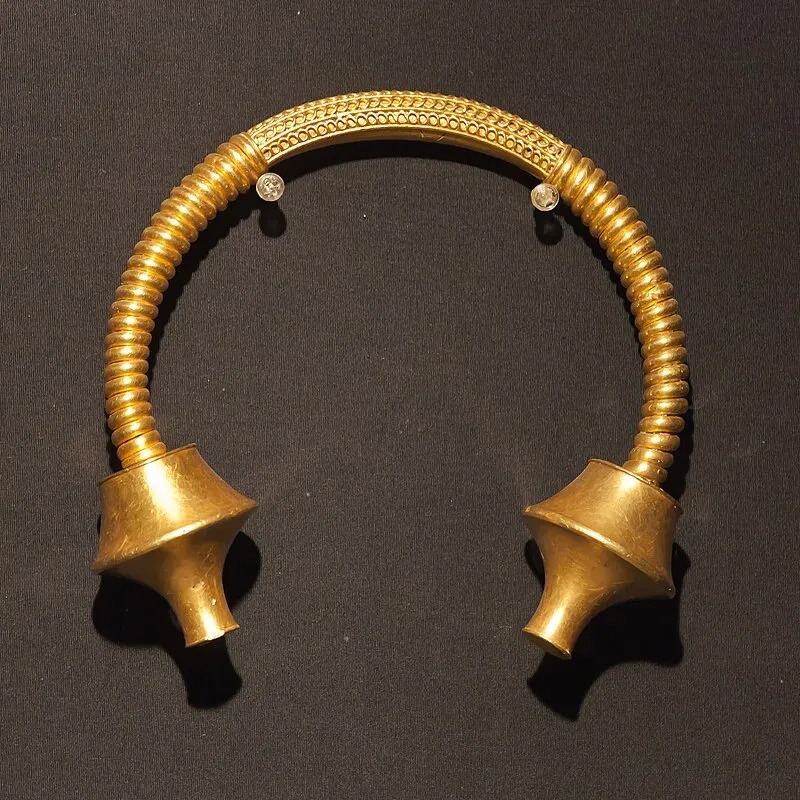
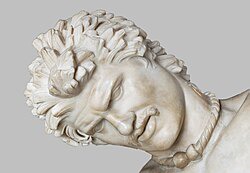
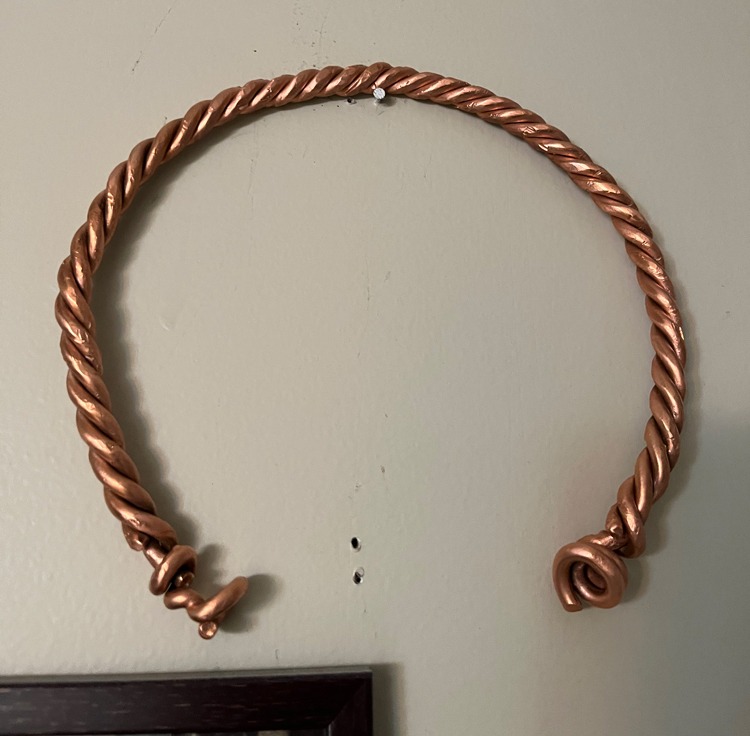
An ancient Germanic man wearing a torc around his neck, and two examples one made of bronze and one made of copper. Our bodies contain meridians and channels of energy which our hearts pump blood containing iron. An interesting phenomenon happens when iron passes copper coils called “Eddy Currents”.
Can we imagine ancient people standing on earths “Ley lines” channeling the natural energy around us?