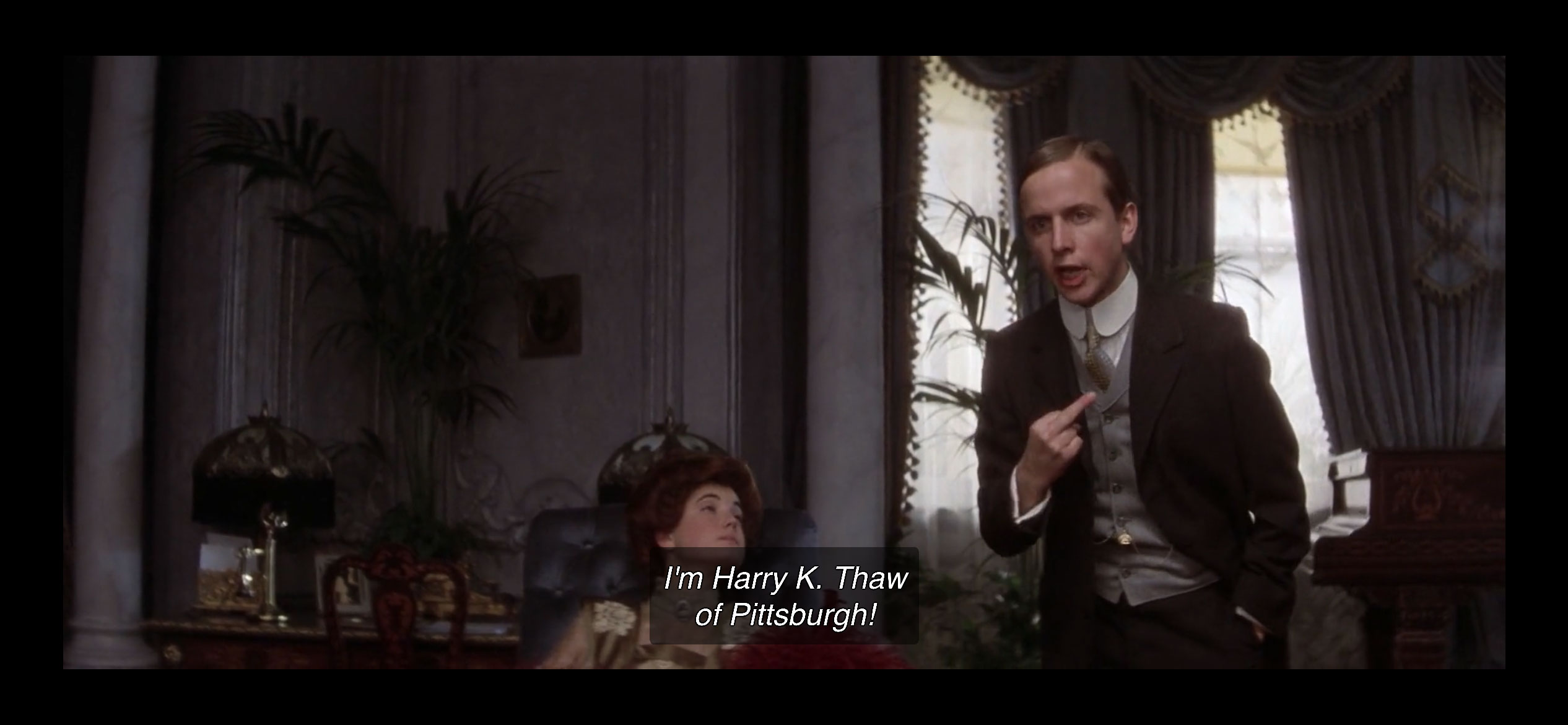
In my own creative universe, characters like the Coca-Cola Man and Waffle Hero represent a vision of futuristic technology woven into storytelling. Advanced suits capable of destroying germs on contact, systems of marketing and communication far beyond what we see today, even beyond the suits currently produced by NASA or SpaceX. Creating these characters forced me to think about something else, where do iconic comic book figures actually come from? If writers can invent heroes by blending imagination with real-world inspiration, then the same must be true for villains. That question led me to one of the most recognizable villains in comic book history, DC Comics’ Joker (1940). While many people point to Victor Hugo’s The Man Who Laughs as the visual inspiration for the character (film 1928), I began wondering (after watching the silent film) if there might be another, darker influence behind Batman’s arch nemesis. In 1906, decades before the Joker appeared in comic books, the world was captivated by the shocking crime of Pittsburgh millionaire Harry K. Thaw. I
In front of hundreds of witnesses atop Madison Square Garden, Thaw approached the celebrated architect Stanford White and shot him three times in the head and torso. The scandal exploded across newspapers worldwide. Nothing of the like was ever experienced at the time. Two men of the Gilded Age, wealthy, powerful, and living extravagant lives became the center of a story defined by obsession, violence, and public spectacle.
Thaw was ultimately declared criminally insane, but the ruthless nature of the act and the theatrical setting of the murder left a lasting imprint on the public imagination for quite a long time. It raises an intriguing question worth exploring: When the Joker entered popular culture in the 1940s, did the infamous actions and personality of Harry K. Thaw contribute, even in some small way, to the archetype of the chaotic villain “The Joker” we recognize today?
The Early Signs of Harry K. Thaw’s Instability
Long before the infamous shooting at Madison Square Garden in 1906, Harry K. Thaw had already developed a reputation for erratic and disturbing behavior. Born in 1871 into one of Pittsburgh’s wealthiest families, Thaw grew up surrounded by immense privilege after his father, a powerful railroad and coal magnate, left the family a fortune. Yet wealth did not bring stability. Even in his youth, those around him described him as unpredictable, emotionally volatile, and prone to extreme mood swings. During his college years in the early 1890s. First at the University of Pittsburgh and later at Harvard his behavior became increasingly disruptive. Reports from classmates and faculty described him as immature and impulsive, frequently engaging in reckless pranks, drunken antics, and confrontational outbursts. His conduct eventually led to his departure from Harvard before completing a degree, an early sign that his wealth often shielded him from the consequences that would have restrained others.
By the mid-1890s and early 1900s, Thaw’s eccentricity had escalated into something far darker. Traveling frequently between Pittsburgh, New York, and Europe, he developed a reputation among high society as both extravagant and deeply unsettling. Witnesses recalled episodes where he lashed out violently at servants, harassed performers, and displayed an obsession with humiliating or intimidating those he felt had wronged him. One disturbing pattern frequently mentioned in historical accounts was his fixation on young chorus girls and actresses, whom he sometimes attempted to “rescue” while simultaneously controlling their lives through his wealth. At the same time, his temper was notorious; several reports describe him threatening people with weapons or becoming explosively angry over minor slights. By the early 1900s, rumors about his instability circulated widely in New York and Pittsburgh social circles. Many who encountered him described a man living in extravagant luxury but increasingly detached from restraint, driven by jealousy, obsession, and a volatile sense of personal justice, traits that would eventually culminate in the shocking events of 1906. Harry K. Thaw’s flamboyant Gilded Age style, his tailored suits, polished wingtip shoes, canes, and fashionable hats, mirrors the exaggerated aristocratic appearance that later became associated with the Joker in popular culture. The Joker’s signature purple suits, theatrical posture, and aristocratic accessories echo the image of the reckless, decadent elite that Thaw embodied in the early 1900s. Thaw was known for extravagant and outrageous behavior, he is even given the credit for lighting cigars with hundred-dollar bills, gestures meant to display both wealth and disregard for social norms.
Escalation Toward the 1906 Murder
In the years immediately leading up to the murder of Stanford White, Thaw’s behavior became even more obsessive and theatrical. Around 1903 he began pursuing Evelyn Nesbit, one of the most famous models and chorus performers of the era. When he learned that Nesbit had previously been involved with Stanford White, the celebrated architect who designed Madison Square Garden, Thaw’s fixation intensified into a personal vendetta. Friends and witnesses later recalled that he repeatedly spoke about White with a mixture of rage and moral outrage, claiming that the architect had “ruined” Nesbit. Over the next several years, Thaw reportedly stalked White socially, appearing at the same restaurants, theaters, and gatherings. He also carried firearms on several occasions and openly discussed violent fantasies about confronting the architect. By the summer of 1906, his obsession had grown so extreme that many people in his circle feared something catastrophic would eventually occur. Their fears proved correct on the night of June 25, when Thaw approached White at the rooftop theater of Madison Square Garden and shot him three times in front of hundreds of stunned spectators, an act so shocking and theatrical that newspapers across the world would soon call it the crime of the century.
The Man Who Laughs Connection
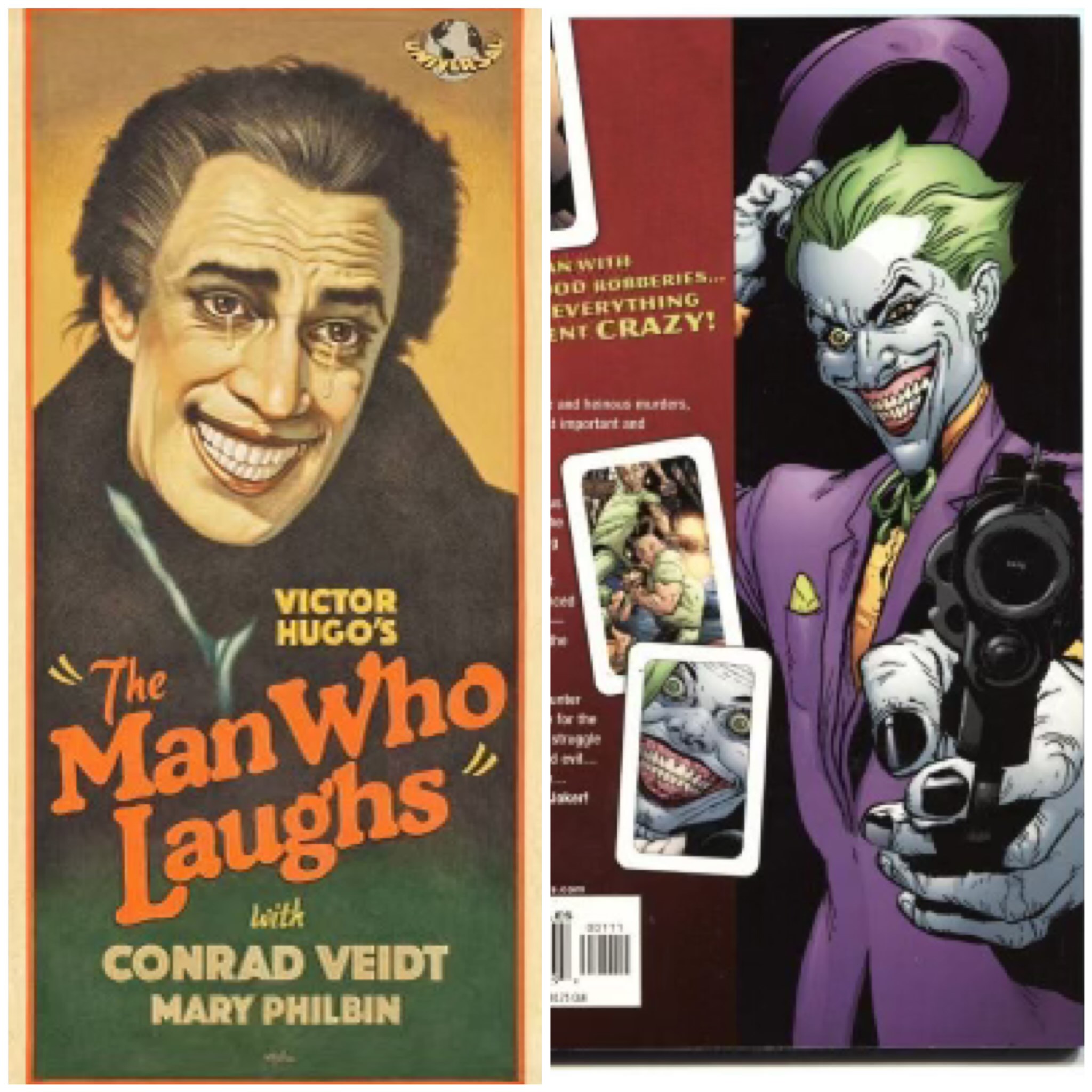
When people try to trace the origins of DC Comics’ most infamous villain, the Joker, they often end up in an unexpected place: a nineteenth-century story written by Victor Hugo titled The Man Who Laughs. The connection is widely repeated in comic history, and at first glance it makes perfect sense. The central character, Gwynplaine, bears an eerie resemblance to the Joker. His face has been surgically altered so that his mouth is permanently carved into a grotesque grin. Darkened eyes, pale skin, and a stretched smile create an image that looks almost identical to the clown prince of crime.
But when one looks beyond the surface, The resemblance between the Joker and The Man Who Laughs is almost entirely visual. The personalities of the two characters could not be more different.Victor Hugo’s story follows Gwynplaine, a boy kidnapped by a group known as the “Comprachicos”. According to the legend Hugo used for his narrative, these criminals abducted children and deliberately mutilated them so they could later be displayed as sideshow attractions or forced to beg in public. In Gwynplaine’s case, surgeons permanently carved his mouth into a wide, laughing grin. To the outside world, he appears monstrous, a living mask of laughter that never fades. Yet inside, Gwynplaine is not cruel, chaotic, or malicious. Quite the opposite. Hugo wrote him as a compassionate and deeply moral character who suffers under the weight of how the world sees him. His appearance causes crowds to laugh and stare, but those who know him understand that the permanent smile hides a tragic humanity.
The 1928 silent film adaptation of The Man Who Laughs, starring Conrad Veidt, made the character visually unforgettable. Because silent films relied on exaggerated facial expression and gestures to communicate emotion, Veidt’s performance emphasized the haunting grin and stark makeup. The image of his stretched smile became iconic in early Hollywood.
More than a decade later, that image would quietly influence comic book history.
When Batman’s creators were developing villains in 1940, writer Bill Finger reportedly saw a photograph of Conrad Veidt in full Gwynplaine makeup. The unsettling grin immediately sparked an idea. The character design for a new villain, one with chalk-white skin, dark eyes, and a permanent smile, began to take shape. That villain would become the Joker.
Yet the inspiration stopped at the face.
The Joker’s personality did not come from Victor Hugo’s tragic hero. Instead, the character absorbed traits from pulp crime fiction and gangster stories of the 1930s. Early versions of the Joker were not comedic pranksters but calculating killers, theatrical criminals who treated murder like a performance. Over time the character evolved into the chaotic trickster audiences recognize today. Who else was the biggest and widest known erratic person at the time capable of murderous acts who seemed to display gangsterism if not the notorious Harry K Thaw of Pittsburgh?
In the end, the Joker inherited the smile of The Man Who Laughs, but none of its personality.
Further Claims to The Joker
Harry K. Thaw’s notoriety did not end with the murder of Stanford White. After his sensational trial, he was found not guilty by reason of insanity and committed to the Matteawan State Hospital for the Criminally Insane in New York (Sound familiar??) Yet even confinement could not contain the spectacle that seemed to follow him. In 1913, Thaw managed to escape the institution and fled across the border into Canada, instantly igniting another international media frenzy. Newspapers on both sides of the border followed the story as authorities attempted to track him down and return him to custody. The dramatic escape only added to the myth surrounding him. A wealthy, unstable figure slipping out of confinement and returning to the headlines once again. It is hard not to notice the parallel to the fictional world of Batman, where the Joker repeatedly escapes from Arkham Asylum, only to reappear in public chaos that once again captures the attention of the entire city.
Even outside the asylum, Thaw’s life continued to generate stories that sounded almost unbelievable. Reports circulated of him chasing a taxi cab through the streets at full sprint while carrying a shotgun after a dispute related to getting “short changed”. In another widely reported incident, he nearly beat a nineteen-year-old man to death using a decorative whip, described in newspapers as an expensive instrument with a silver handle and ornate fittings. Accounts of drug use, possessiveness, and violent mood swings followed him throughout his life. Witnesses frequently described behavior that was wildly erratic, yet repeatedly tolerated or excused because of the wealth and social status attached to the Thaw name. For many observers looking back at the era, these elements create a striking visual and behavioral resemblance to the archetype later embodied by the Joker in comic books and animated series. While popular explanations point to Victor Hugo’s The Man Who Laughs as the primary inspiration for the character’s appearance, the connection there is largely limited to the unsettling smile carved onto Gwynplaine’s face. The personality traits that define the Joker, unpredictability, theatrical violence, and a willingness to commit shocking acts in full public view are far less evident in Hugo’s tragic hero. When placed alongside the real-life actions of Harry K. Thaw, however, the comparison becomes harder to ignore. Thaw’s crime was not carried out in the shadows like the calculated work of gangsters from the same era. Instead, he committed it openly, stepping forward in front of hundreds of witnesses and firing three point-blank shots into Stanford White’s head. The act was dramatic, ruthless, and designed whether consciously or not to command the attention of the entire world. In that sense, Thaw’s behavior feels less like the methodical violence of organized crime and more like the chaotic spectacle that later came to define one of fiction’s most infamous villains.
Evelyn Nesbit is The Joker’s Harley Quinn ?
The Gilded Age scandal of Harry K. Thaw and Evelyn Nesbit mirrors certain narrative elements later used in the Joker Harley Quinn archetype, a flamboyant, unstable man at the center of public spectacle and a young woman whose image becomes entangled with his notoriety.
Harry K. Thaw cultivated a reputation as a scandalous Gilded Age aristocrat. He dressed extravagantly, spent lavishly, and behaved in shocking ways that newspapers eagerly covered. The Joker similarly presents himself as theatrical, flamboyant, and deliberately outrageous. Both figures thrive on spectacle and public attention.
In the Batman universe, the Joker’s relationship with Harley Quinn is also defined by obsession and possessiveness, though in a very different fictional context. Their relationship often revolves around psychological manipulation and dependency. The Thaw–Nesbit–White scandal became one of the first truly modern media spectacles. Newspapers printed endless dramatic stories about their relationship and the trial.
In fiction, the Joker–Harley dynamic also became sensationalized within the Batman mythos and pop culture, turning their relationship into one of the most recognizable villain pairings.
Just A Prank?
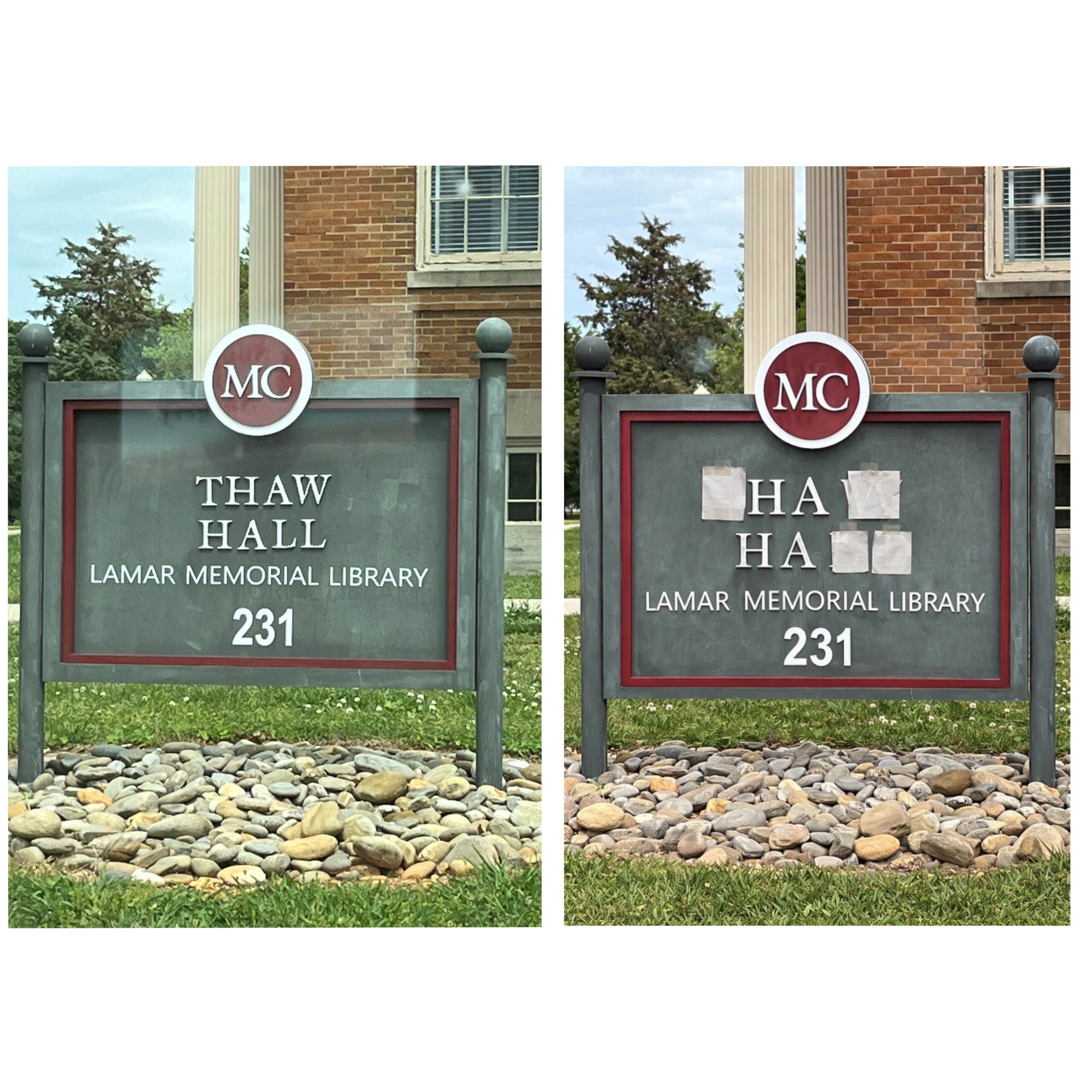
When I first came across the name “Thaw Hall” on one of the buildings at Maryville College, where I studied it came to my attention this was the same name as the killer of Stanford White the Architect who was also Nikola Tesla’s best friend. The building proudly bore the Thaw name (Thaw Hall), and most people assume, or will tell you, that it honors Harry K. Thaw’s father, the Pittsburgh industrialist. But a closer look at the historical record tells a more complicated story. The Thaw family spent years protecting Harry’s reputation, reframing his scandalous behavior as acts of devotion or defense. They celebrated him publicly, holding parades in his honor, and named buildings after him as a way to soften the darker narratives that had followed him for decades. At Maryville College, his legacy even stretches to traditions like the mountain man challenges, reflecting Harry’s own pursuits as an avid hiker, climber, and expeditionist. In this way, the family transformed scandal into a symbol of prestige and social triumph. One conversation with a fellow alum stayed with me and inspired this blog: she told me about a prank where students would cover certain letters on the Thaw Hall building so that only the words “ha-ha” remained visible. In that small, mischievous gesture, it feels as though Harry K. Thaw still gets the last laugh.