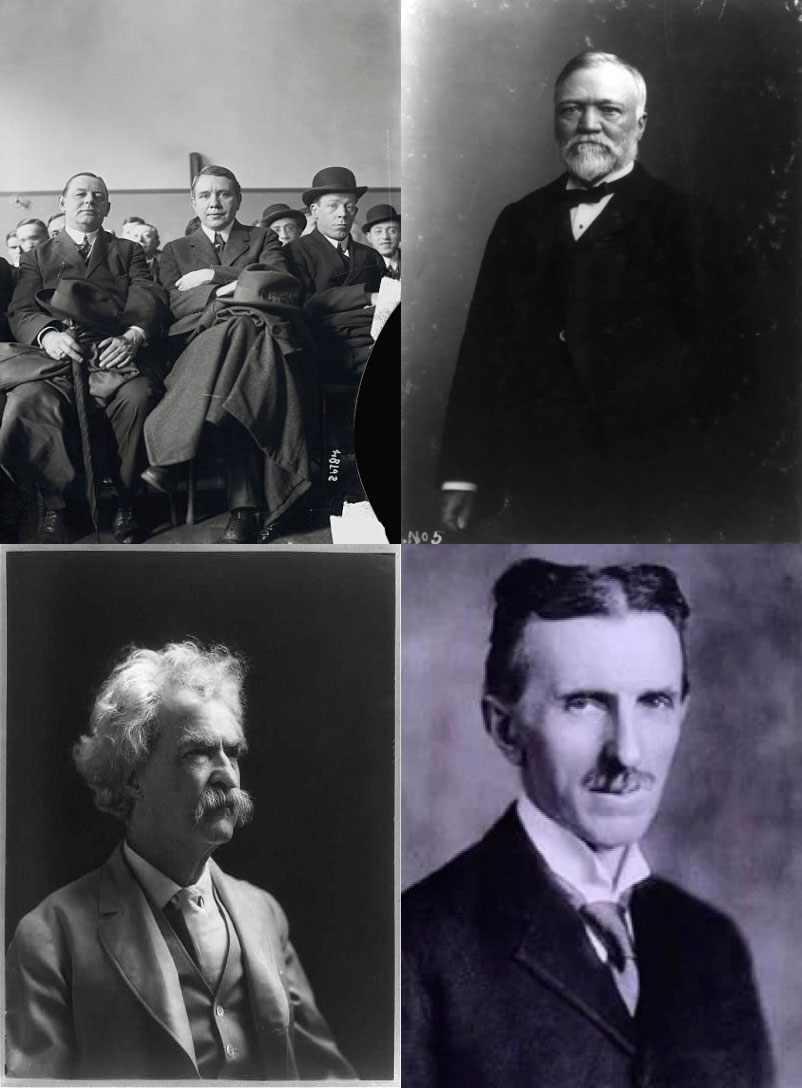
Harry K. Thaw and the Gilded Age
Harry K. Thaw and the Gilded Age isn’t a title I pulled out of nowhere. It is grounded in real-life connections here in East Tennessee. Most notably, Maryville College (Maryville TN) where his building stands named after Harry K. Thaw himself. And just three miles away is Tesla Boulevard, named in connection with the legacy of inventor Nikola Tesla. The very strange twist here is Mark Twain, a close friend of Tesla, wrote a book titled The Gilded Age: A Tale of Today, his novel takes place right here in East Tn and not New York. Writer Mark Twain is credited with coining the term “The Gilded Age” through his 1873 novel, written with Charles Dudley Warner. Parts of the Gilded Age, spanning the years from the 1870s into the early 1900s, certainly belong to the titans of their respective industries: J.P. Morgan in finance, Andrew Carnegie in steel, and Nikola Tesla in electrical innovation. But Harry K. Thaw? He owns the notoriety, the villainy, and the role of the obvious bad guy in the whole movie. And its through these coincidences that I began to wonder if the popular HBO series “The Gilded Age” would present the real life Harry and Nikola. So while I was attending school at Maryville College HBO released its series The Gilded Age. The series opens in 1882 New York, with none other than Stanford White, the famed architect whose life would eventually intersect with Harry K. Thaw’s in a notorious murder case. When you consider the connections between Maryville College, Harry K. Thaw, Nikola Tesla, and Mark Twain, it becomes difficult for me to ignore the remarkable timing of it all.
As I watched the first season of HBO’s The Gilded Age, I began noticing something that made the series even more interesting to me. They were quietly setting up the background of Stanford White’s character, whose life would eventually end at the hands of Harry K. Thaw. He (Stanford White) appeared in both Episode 1 and Episode 7. In each appearance, the series touched on his fondness for youth and beautiful young women, hinting at his personal life that would later become one of America’s most notorious scandals.
We know how Stanford White’s story ends. On June 25, 1906, Harry K. Thaw shot and killed him on the rooftop of Madison Square Garden, setting off a sensational murder case that exposed the private lives and public reputations of America’s wealthiest society.
This leaves me with a question: Will HBO’s The Gilded Age ever introduce Harry K. Thaw?
No.
His story is dark, controversial, and deeply tied to the excesses of the wealthy elite. But that is precisely what makes him such a compelling figure to consider within the larger story of the Gilded Age. If Stanford White is part of the world the series is portraying, Thaw represents the Villain that would eventually collide with it.
For now, there is no confirmed announcement that Harry K. Thaw will appear in the series. Still, the historical connection is undeniable, and I cannot help wondering whether this notorious figure will ever find his way into the HBO version of the Gilded Age.
Nikola Tesla: The Other Controversial Figure of the Gilded Age
Equally controversial in his own right was Nikola Tesla. Placed squarely in the middle of the Gilded Age, Tesla remains a fascinating and often misunderstood figure for many reasons. His ideas were extraordinary, ambitious, and sometimes far ahead of his time. Bringing them to life required enormous financial backing, and some of his ambitions threatened to make established industries obsolete.
Tesla’s rivalry with Thomas Edison became one of the defining conflicts of the era. During the War of the Currents, Edison and his supporters promoted direct current, while Tesla championed alternating current as a more practical way to transmit electricity over long distances. (Alternating current is still the primary method for our electrical needs used to this day)
Tesla’s life raises a larger question about the Gilded Age: what happens when an inventor’s ambitions collide with the financial interests of powerful men?
Like Harry K. Thaw, Tesla occupies a complicated place in the story of the Gilded Age, although for very different reasons. Thaw became infamous through scandal and murder; Tesla became legendary for his inventions and his vision of the future. Both, in their own ways, remind us that the history of this era was far more complicated than its glittering surface suggests.
But will Nikola Tesla ever make an appearance in HBO’s The Gilded Age? No, not in any way that could do his story justice. Tesla’s life, his inventions, his rivalries, and his extraordinary ambitions deserve far more than a casual guest appearance. His story would require an entire series dedicated to the man himself. The killing of Stanford White was the start of the collapse of Tesla’s connections to his futurist ideas. Stanford White was the lead architect of the gilded age, the one all families of means hired. He was also known to frequent delmonico’s where other like minded, extremely ambitious men, such as Isidor Straus, Benjamin Guggenheim, and John Jacob Astor, would meet and discuss their futuristic ideas, with Tesla finding himself in those same circles.
The same can be said for Harry K. Thaw. His life, his wealth, his notoriety, and his place in one of the most sensational scandals of the Gilded Age deserve the same treatment. A brief appearance in someone else’s story could never capture the full weight of his role in history.
Both men belong to the same remarkable era, yet their stories represent two very different sides of it. Tesla’s is a story of invention, ambition, and a vision of the future that attracted other futurists. Thaw’s is a story of privilege, scandal, and a murder that shocked American society. A few real life characters have already been introduced by the show, which have real connections to Nikola Tesla himself, Thomas Edison, JP Morgan, Ward Mcallister, and Mrs. Astor.
To tell either story properly, we would need a series in the same historical-drama style as HBO’s The Gilded Age, with the time and attention to explore the people, rivalries, and events that shaped their lives. Neither man deserves to be reduced to a passing reference in someone else’s story. Their lives are the stories.
Mark Twain, The Gilded Age, and East Tennessee
In Mark Twain and Charles Dudley Warner’s 1873 novel, The Gilded Age: A Tale of Today, the title captures the idea of a thin layer of gold covering a less valuable material, creating the appearance of wealth without the substance beneath it. It was a fitting metaphor for an era in which America’s outward prosperity often concealed corruption, greed, and inequality.
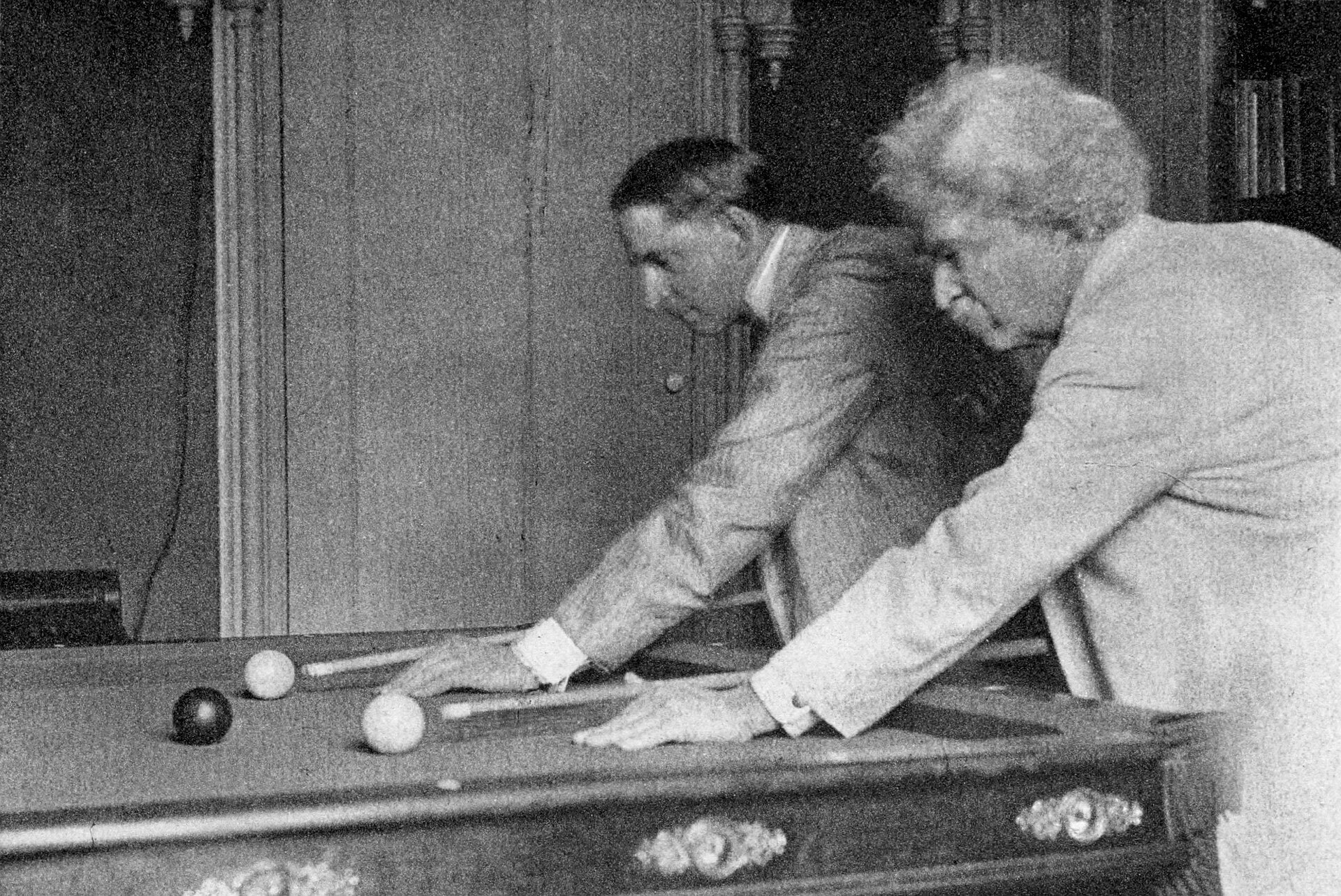
But there’s another connection that makes this story particularly interesting to me. Exactly 33 years after Mark Twain published The Gilded Age, Harry K. Thaw murdered Stanford White. And during the real-life court proceedings, after the sessions were over, Mark Twain would invite Martin W. Littleton to play billiards, and the two would discuss the case and the deeply paralleling, almost coincidental story that Twain’s novel describes. What’s even more eerie is that the crime in the book bears a striking resemblance to the real-life crime committed by Harry K. Thaw. Can you imagine the late-night billiard sessions Mark Twain would have with Martin W. Littleton, Harry K. Thaw’s attorney, after spending all day defending Thaw in court? Littleton would visit Twain, play billiards, and discuss the case, exposing the hypocrisy of the wealthy elite who believed their money and status could put them above the law. It’s hard not to see the parallels with Twain’s own The Gilded Age, a story that mocked the greed, corruption, and ambition of those who believed wealth could buy them just about anything. Walking the grounds at Maryville College one can almost feel the words from Twain’s novel come to life, with Andrew Carnegie’s building sharing the campus space with his in law the Notorious Harry K Thaw. The Gilded Age in Tennessee.